




WHAT IS FEMINIST FASHION? A GUIDE TO DRESSING WITH PURPOSE

Let's start with what feminist fashion isn't.
It isn't a uniform, a dress code, or a requirement to wear dungarees, burn your bra, or plaster yourself in slogans from head to toe. (Although if any of those appeal to you… genuinely, go for it!)
It also isn't a £920 Dior t-shirt that says "We Should All Be Feminists," manufactured under conditions that are, at best, murky (there's something deeply uncomfortable about a luxury brand charging nearly a grand for a mass-produced feminist slogan).
That's not feminist fashion; that's feminism as a marketing budget.
So what is it?
Feminist fashion is about who decides what you wear
At its core, feminist fashion is clothing chosen on your terms, not to please someone else, not because a magazine told you it was flattering, and not because it hides the bits you've been taught to be ashamed of.
It's definitely not about performing femininity in a way that makes other people comfortable.
Women have been told what to wear for centuries, literally: corsets that restricted breathing, skirts that restricted movement, heels that restricted walking, dress codes that restricted access. The history of women's clothing is largely a history of other people's preferences, imposed on women's bodies.
Feminist fashion pushes back against that. It says: “I'm wearing this because I chose it. Not because you told me to.”
And here's the bit that trips people up; that choice can look like anything.
A power suit is feminist if you chose it; so is a mini skirt; and so is a baggy hoodie that says "Smash The Patriarchy." The politics aren't in the garment, they are in the choice.
A very brief history (because context matters)
Feminist fashion didn't start with slogan tees… It started with suffragettes.
In the late 19th and early 20th centuries, women fighting for the vote chose their clothing deliberately. White for purity and unity, purple for dignity, green for hope: these weren't random choices, they were strategic. Clothing became a visual signal of solidarity, recognisable at a distance, long before hashtags existed.
By the 1920s, the flapper movement pushed it further. Shorter hemlines, bobbed hair, relaxed silhouettes… these weren't just fashion choices, they were declarations of autonomy. Women were literally loosening the constraints placed on their bodies.
Then came the 60s and 70s, with miniskirts, trousers in the workplace, and bra-burning (which, for the record, mostly didn't actually happen, but the symbolism stuck around anyway). Fashion got explicitly political: what you wore said something about what you believed.
Then punk arrived. Vivienne Westwood didn't just challenge fashion conventions, she demolished them. Ripped fabrics, safety pins, confrontational slogans. The message was clear: fashion doesn't have to be pretty. It has to be honest.
And now? Now we've got slogan tees, ethical supply chains, size-inclusive ranges, and an entire generation of women who've decided that what they wear should reflect what they think.
Which brings us to the bit that actually matters.
The ethics question: who made your clothes?
You can't call your fashion feminist if the women who made it aren't treated fairly. Full stop.
The global fashion industry employs roughly 75 million garment workers, most of them women. Many earn poverty wages, work punishing hours, and clock in somewhere unsafe. Fast fashion, the £5 t-shirt, the £3 vest top, and the haul culture all over your For You Page all run on the exploitation of women in the Global South.
Dressing with purpose means thinking about this, not obsessively, not guiltily, just honestly. Where was this made? Who made it? Were they paid fairly? Is the fabric sustainable?
Nobody's expecting perfection here, and most of us can't afford to replace our entire wardrobe with ethically made clothing overnight, but you can start asking the questions, and start choosing differently, where you can, when you can.
At The Spark Company, our clothing is ethically manufactured, printed with eco-friendly inks, and made with organic cotton where possible. We're not perfect, no brand is, but we believe feminist fashion starts with treating the women who make the clothes as well as the women who wear them.
The body politics question: sizing isn't optional
Here's a quick test for any brand claiming to sell feminist fashion: what's your size range?
If the answer stops at a UK 16, then the feminism is decorative.
Feminist fashion means every woman can wear it, not just the ones who happen to fit a sample size. You can't sell empowerment in a limited set of bodies.
Our range runs from XS to 4XL across most styles, not because it's good marketing (although, fine, it is), but because excluding women from clothing that's supposed to empower them is a contradiction we're not interested in.
Plus-size women have been underserved by fashion for decades, pushed into separate sections, separate brands, separate websites, like their bodies were an afterthought.
Feminist fashion doesn't do that.
It puts every size on the same page, the same collection, the same designs. That's what equality actually looks like when you apply it to a product instead of just a slogan.
The slogan tee question: is wearing a t-shirt really activism?
This is the one we hear most. "Wearing a feminist t-shirt isn't activism." "You can't buy your way to equality." "Slogan tees are performative."
It’s a fair point, so let’s unpack it.
A feminist t-shirt is not, on its own, going to dismantle the patriarchy. Nobody at The Spark Company thinks otherwise. A t-shirt doesn't change policy, close the pay gap, or protect reproductive rights.
But here's what it does do.
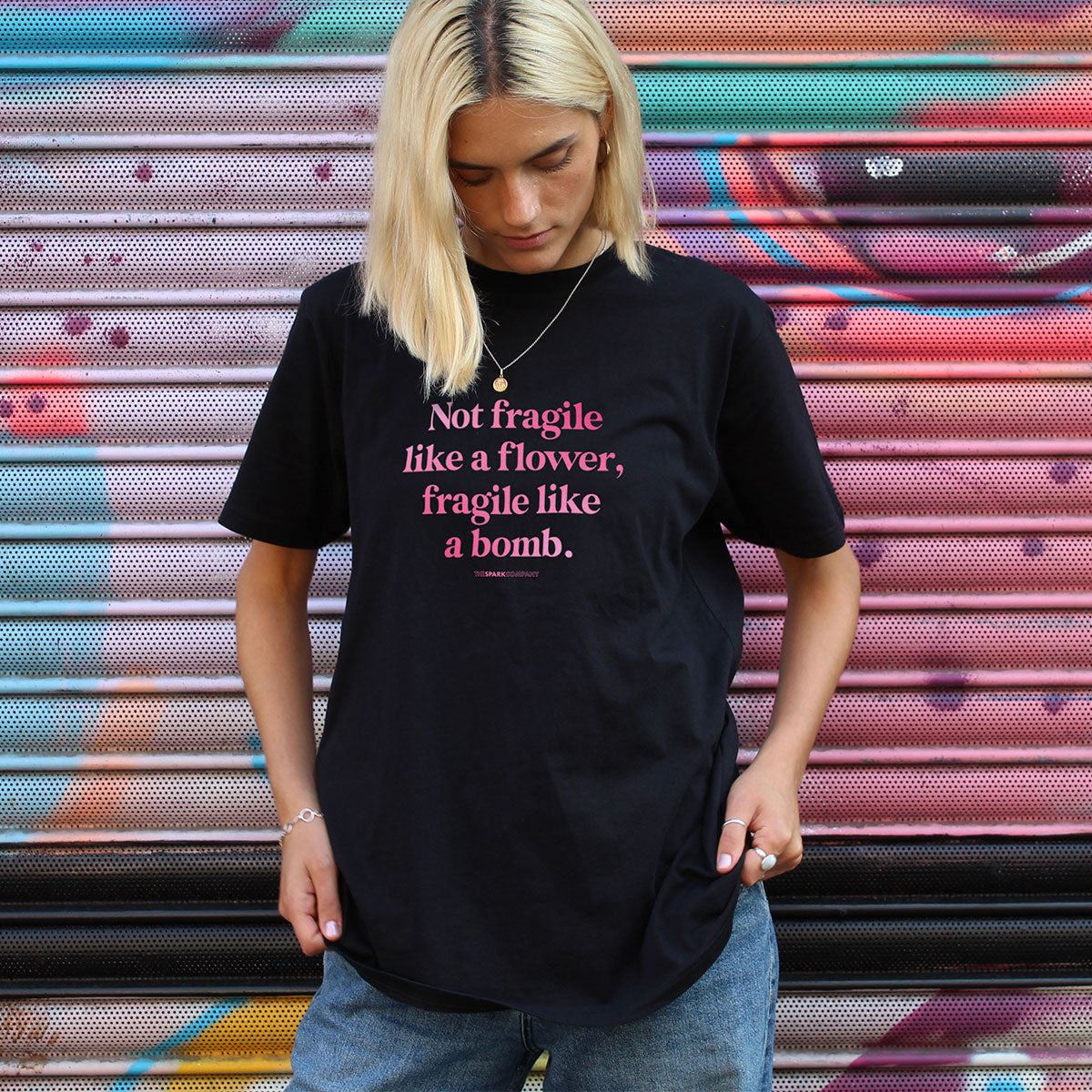
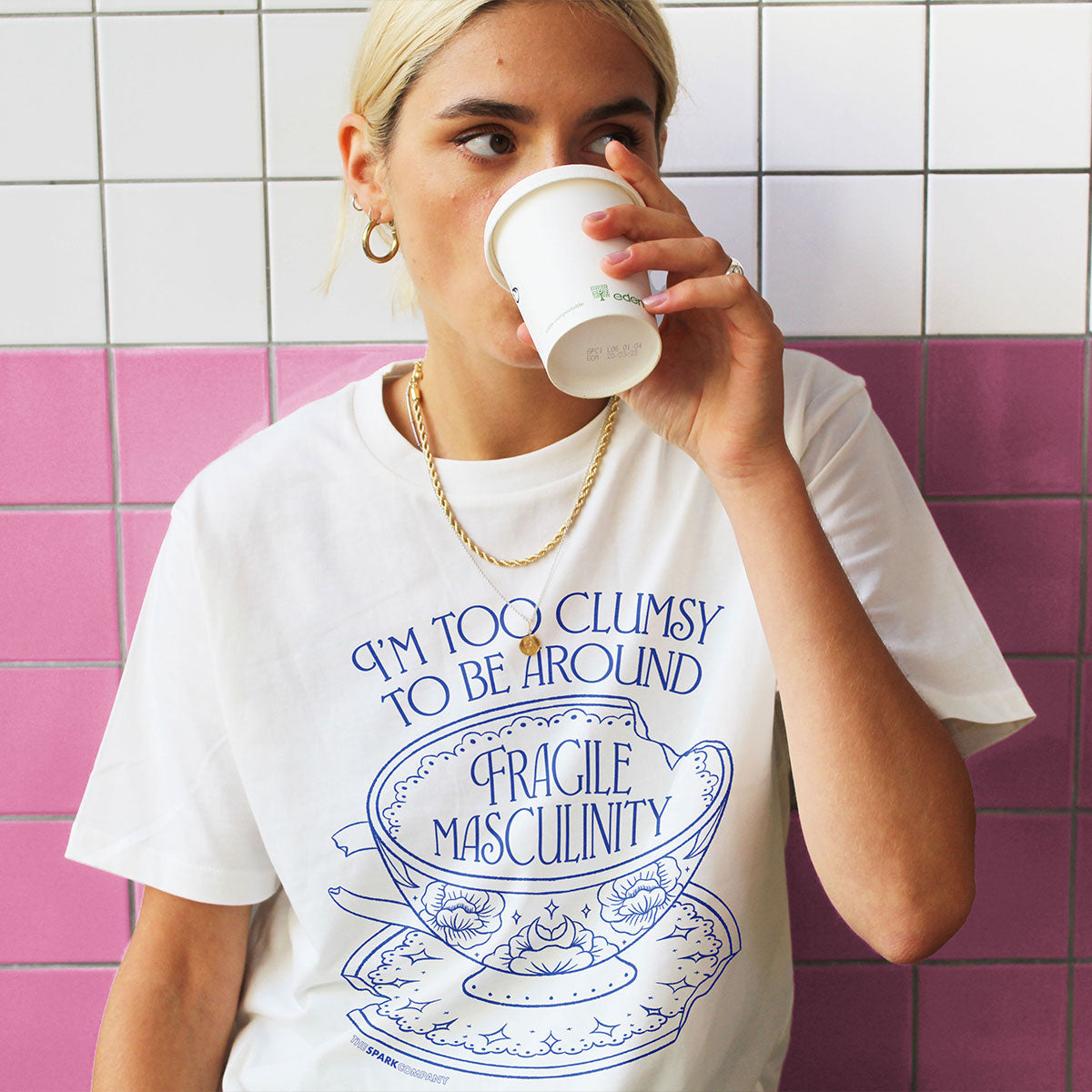
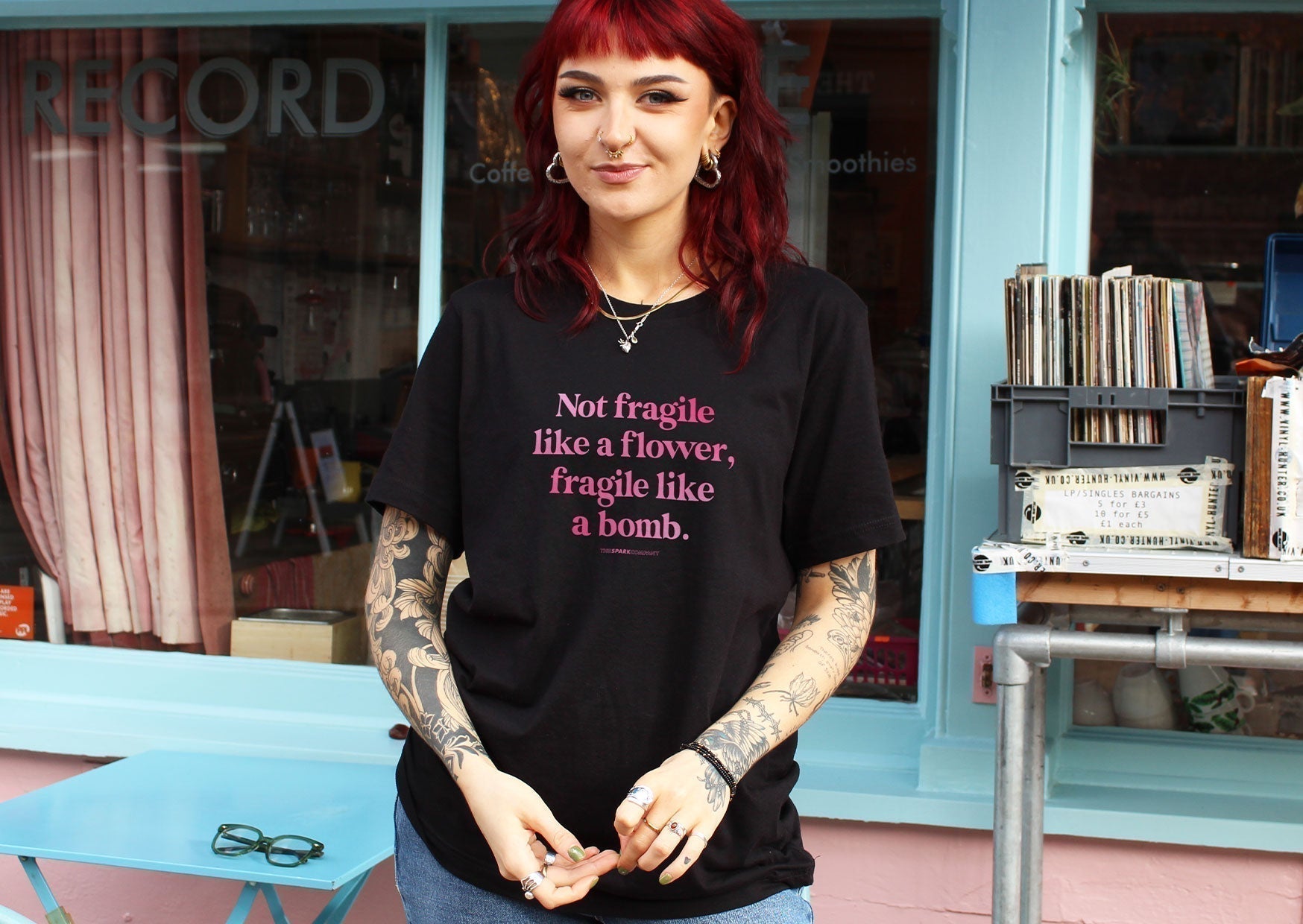
It makes a belief visible. Walk into a room wearing a tee that says "The Future Is Female" or "Not Fragile Like A Flower, Fragile Like A Bomb," and you're communicating something without saying a word. You're signalling to every other woman in that room: I'm on your side.
That visibility matters, in workplaces where women are still expected to be quiet, in schools where girls are still taught to shrink, and in public spaces where women's bodies are still treated as public property.
Is it enough? No. Is it nothing? Also no. It's one small, visible, wearable thing in a much bigger picture. And anyone who tells you it's worthless has probably never been the only feminist in a room and spotted someone else wearing the same message.
So what does "dressing with purpose" actually look like?
It's not a checklist. It's not a set of rules (that would rather defeat the point). But if you want a rough framework, here's one.
1. Ask who made it
Not every time, not to the point of paralysis, but enough that you start making different choices. Support brands that pay fair wages, use ethical factories, and treat their workers like humans. Be wary of brands that won't tell you where their clothes are made. The silence usually means something.
2. Ask who can wear it
Does the brand offer inclusive sizing? Do they show diverse bodies in their marketing? Or is the "empowerment" messaging only available in a 6–14? A feminist brand should look like its customers. All of them.
3. Ask what it says
Not just the literal slogan, but the message behind the brand. Does this company support women year-round, or only when it's commercially convenient? Do they donate to causes that matter? Do they actually practice what they print?
4. Ask why you're wearing it
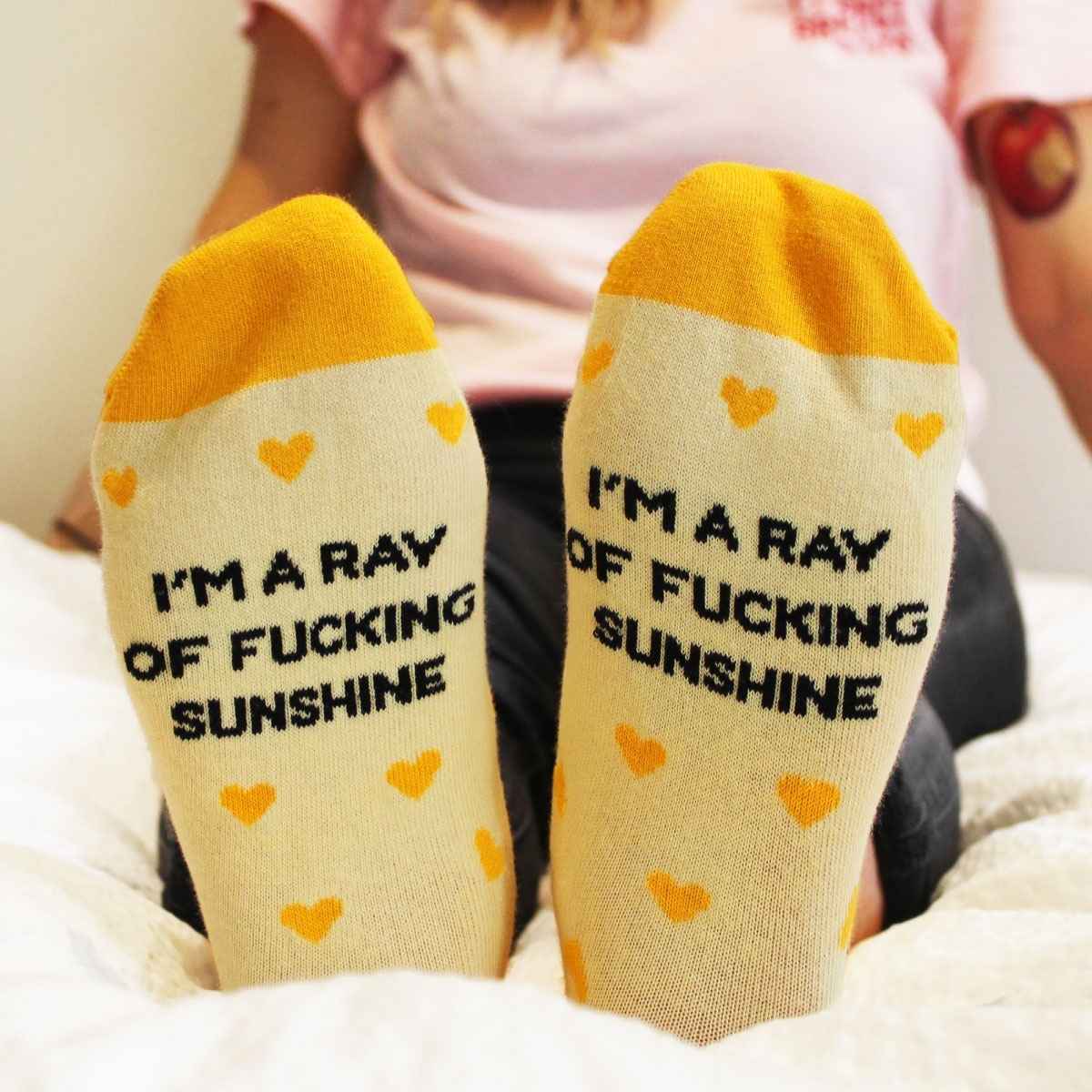
The most feminist thing you can do with your wardrobe is wear what you want, for your own reasons, without apology. That might be a slogan sweatshirt that says exactly what you're thinking. It might be a plain black t-shirt that makes you feel powerful. It might be a pair of socks with a message only you know is there.
The point isn't what you wear. The point is that you chose it.
Where we fit in
We started The Spark Company because we wanted feminist fashion to exist outside of luxury price tags and performative marketing. Clothing that said something, made by people who were treated fairly, available in sizes that include rather than exclude, at a price that doesn't require a second mortgage.
We're not the only brand doing this, and we'd genuinely encourage you to look at others too. The more feminist fashion brands that exist, the better. But if you're looking for a place to start, we've got over 100 designs, 29,000+ five-star reviews, and a donation to charitable causes with every order.
Dressing with purpose doesn't have to be complicated. It just has to be deliberate.
👉 Shop Feminist Clothing

Leave a comment
This site is protected by hCaptcha and the hCaptcha Privacy Policy and Terms of Service apply.